Frequently Asked Questions
What is the benefit of having battery storage on the grid?
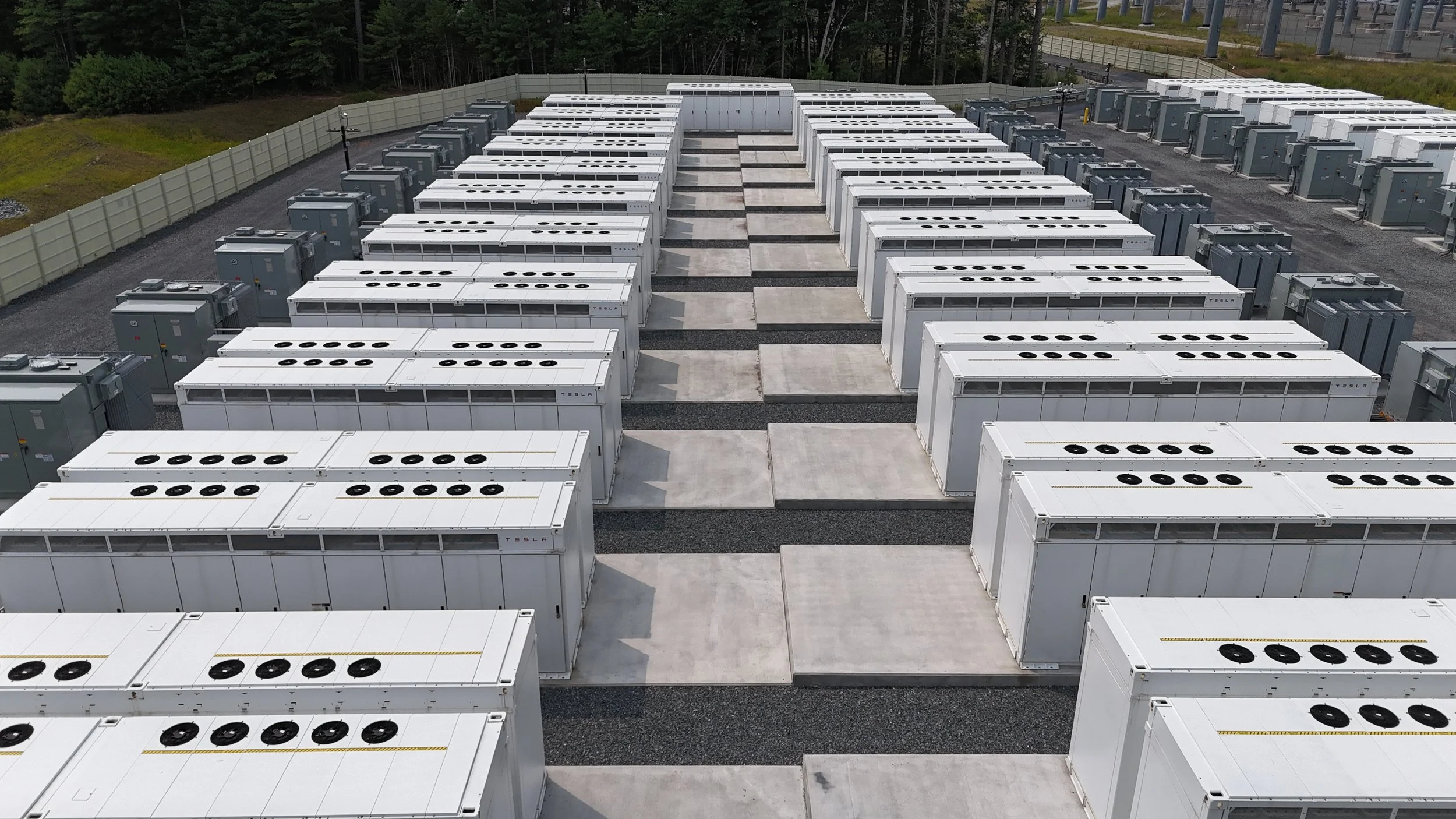
Large-scale battery storage systems like the Crawfish Creek facility benefit the local electrical grid by storing lower-cost energy when there is a surplus and delivering it back to the grid when it is needed most. This helps put downward pressure on electricity costs for customers.
How did you choose the project location for Crawfish Creek?
A variety of siting criteria were considered, including but not limited to electric grid compatibility, land use designations, environmental resources, topography, and proximity to critical utility infrastructure. Crawfish Creek’s location met the optimal criteria across all categories.
Does Crawfish Creek have a partner in the development of the facility?
Crawfish Creek is being developed in partnership with Plus Power, North America’s leading standalone energy storage platform. Plus Power develops, owns, and operates utility-scale energy storage facilities that enable a more efficient and reliable electrical grid to support residents and businesses. The Plus Power team, led by seasoned executives from the renewables and energy storage industry, is accelerating the deployment of transmission-connected battery storage throughout the United States to meet growing demand for electricity.
What prompted the development of Crawfish Creek?
The Crawfish Creek facility is ideally situated to provide energy, capacity, and grid services to North Alabama and the Tennessee Valley, which are seeing growing energy demand.
How long will the batteries last? What will happen to them after that?
The Crawfish Creek project will have a lifespan of at least 20 years. Crawfish Creek Energy Storage will be augmented within the existing project layout with supplemental battery storage units to maintain expected performance. At the end of the project’s operating life, the battery system will be removed, and the land will be restored to pre-existing conditions. Because the battery components contain valuable minerals and technology, the components will be used for recycling and salvage value.
Are there environmental, cultural, or archaeological features that could be disturbed on the project site?
The property on which the Crawfish Creek facility is being developed has no known cultural or archaeological features within its footprint. A portion of the property underwent intensive mining activity many decades ago and thus was previously disturbed. The site primarily consists of open grazing land adjacent to existing high-voltage overhead transmission lines, and the facility is intentionally sited to avoid significant environmental impacts.
What considerations are being taken to ensure the safety of the project?
Safety is paramount to the Crawfish Creek facility and to Plus Power. The Crawfish Creek facility will utilize best-in-class technology, building off decades of global use and application of batteries to support the electric grid. The battery and system will be held to the National Fire Protection Association 855 national standard and other related grid infrastructure codes and standards. In addition, the system will utilize a variety of thermal management systems, as well as remote monitoring strategies, to maintain system stability. The local fire departments will be fully engaged in design discussions through the process of creating a dedicated Emergency Response Plan for the project, and the Plus Power team will continue with significant collaboration and training with first responders so that proper techniques are used in the unlikely event of an emergency.
In addition, this type of facility does not emit air pollution and does not use water or create wastewater as part of its operation.
Will Crawfish Creek be able to withstand a natural disaster?
The facility will be designed per American Society for Testing and Materials standards to ensure foundations and infrastructure meet local requirements.
Will the Crawfish Creek facility impact my views?
The facility is ideally situated in an area already developed with existing public utility uses, away from residential areas. The battery enclosures have a low profile and will be screened by existing and proposed vegetation. As such, the impact on local views will be very limited.